Click on arrows to show pull-down menus:
This family contains the most notorious agricultural pest I've ever encountered, the Cabbage White, abundant where there are cabbage family plants, but absent elsewhere. On the other hand, Cloudless Sulphurs seem to be abundant wherever the weather is warm. Sleepy Oranges have widely varying wing patterns that seem to be determined by the local climate at that time, and seem to fall into five stages.
Whites (Pierinae sub-family)
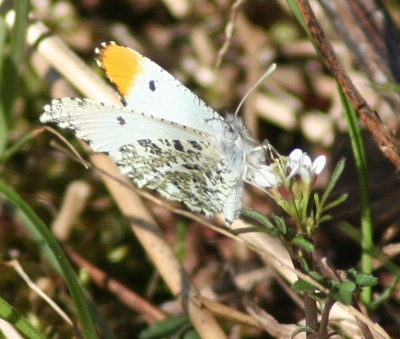
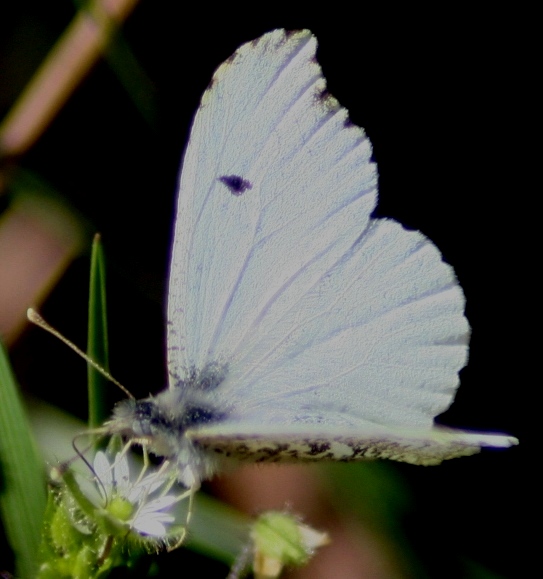
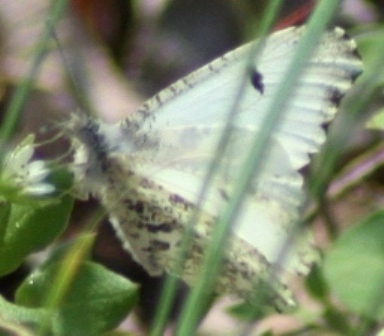
Falcate Orangetips (Anthocharis midea)
Seen at Indian Creek Wildlife Observation Trail, Chatham County, NC.
|
|
|
|
| Falcate Orangetip. This male managed to discover this small white flower in an apparently flowerless scrubby field on 3/10/06. | Falcate Orangetip This female appeared on 4/4/06. | Female Falcate Orangetip, Indian Creek Wildlife Observation Trail, Chatham County, NC, 3/25/07. Note the plant it's visiting, with its white flower and spade-shaped leaves. |
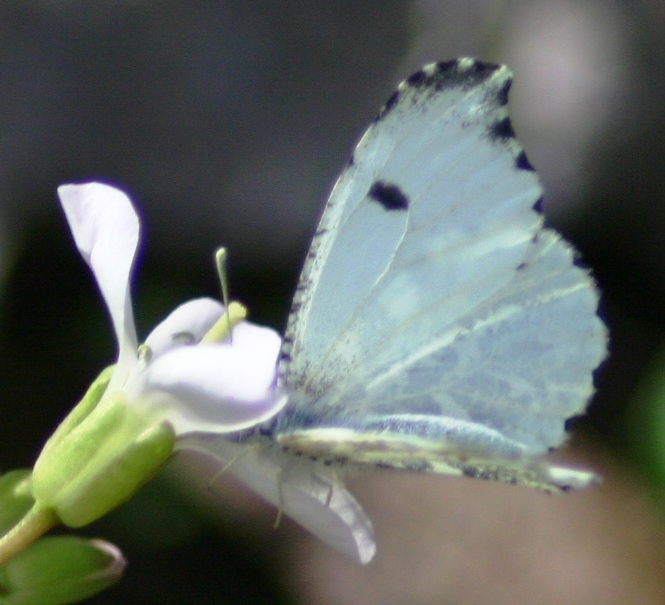
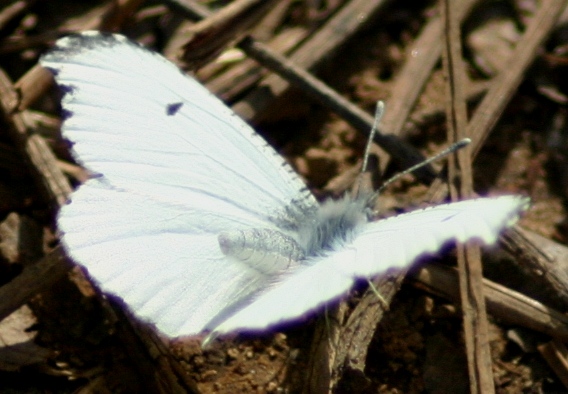
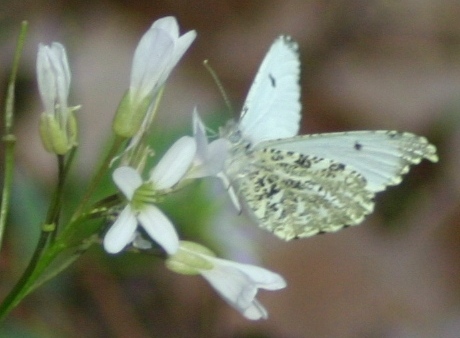
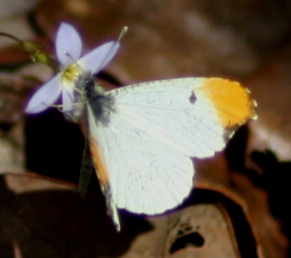
All seen in the Orange County part of Eno River State Park on 4/4/05. They visited at least three species of plants with small white flowers. One of these is the Toothwort (Cardamine genus). According to Bob Cavanaugh of Carteret County, NC, the Shepherd's-Purse, a pest plant, is their main host plant on the NC coast.
 |
 |
 |
 |
 |
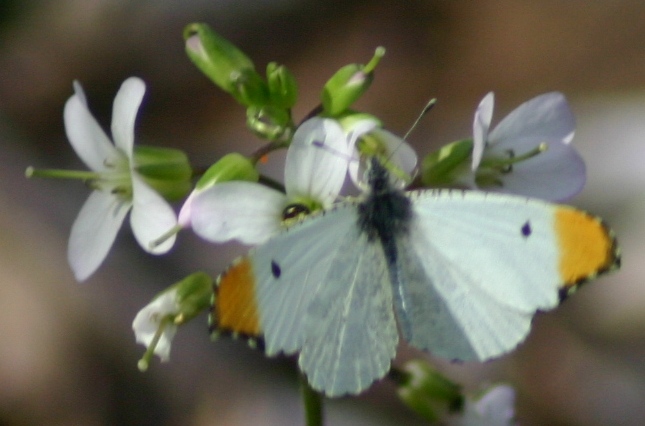 |
| Falcate Orangetip Female: notice the "falcate" shape of the forewing apex. It's harder to see on the male. | Falcate Orangetip Female | Falcate Orangetip Female | Falcate Orangetip Male on bluet | Falcate Orangetip Male | Falcate Orangetip Male, visiting a Bluet or Quaker Lady, according to Josh Rose |
 |
 |
 |
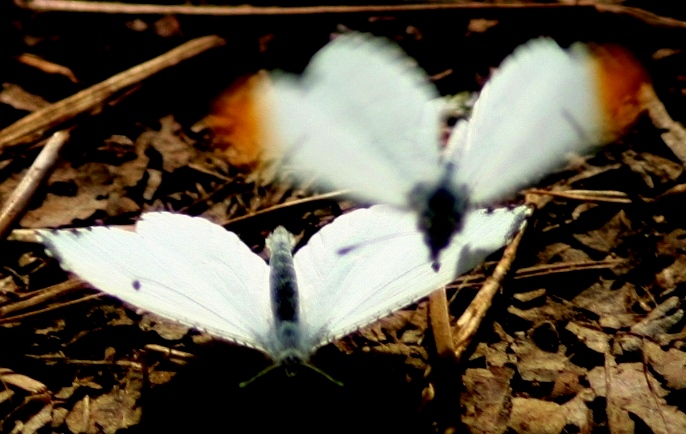
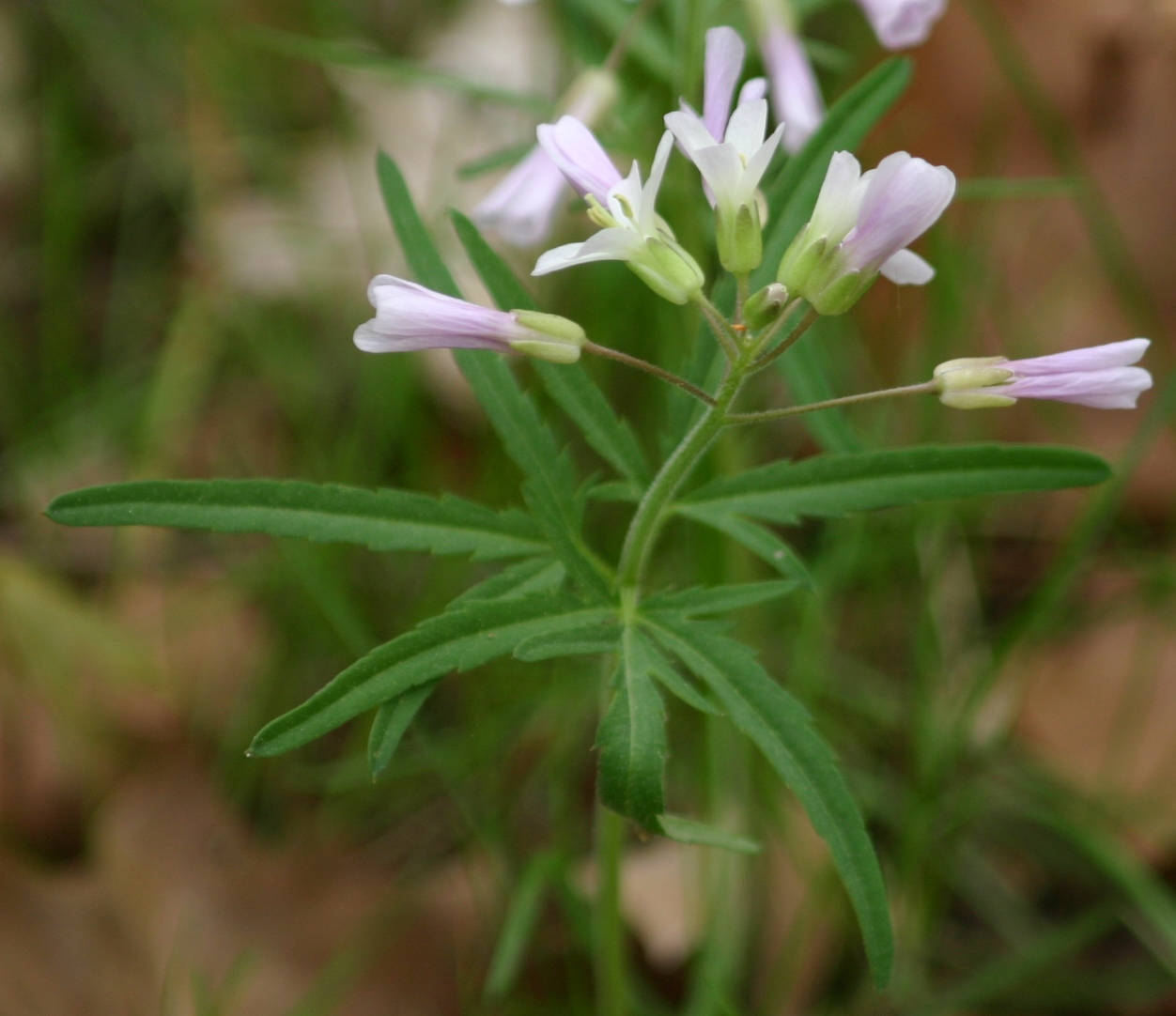
| Falcate Orangetip Male and female engaged in mating ritual. The male fluttered at various fixed points above the female, who remained stationary. | Falcate Orangetip Eno River State Park, Old Cole Mill Road access, 4/7/05. The toothwort plant, a member of the Cardamine (bittercress) genus. Falcate Orangetips favor this plant. | Female Falcate Orangetip, Indian Creek Trail, Chatham County, NC, 4/10/05 |
Great Southern Whites (Ascia monuste)
 |
 |
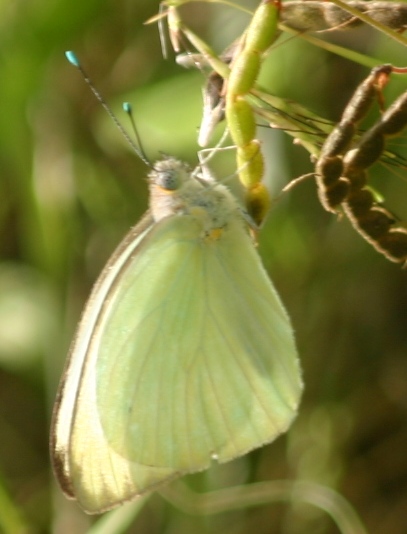 |
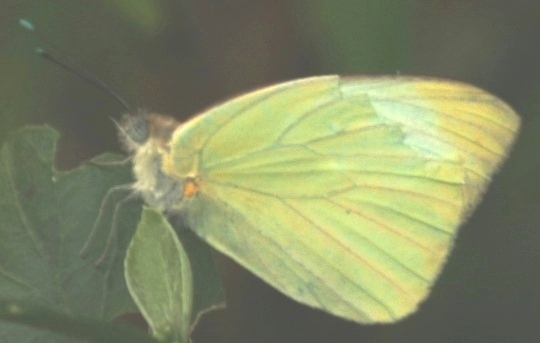
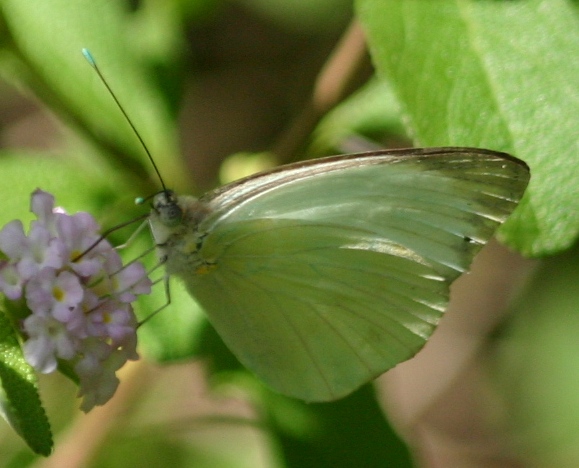
| Female. This butterfly may officially be a "white," but it's actually very colorful. The mostly yellow wings have some orange and green veins, and the antennae clubs are light blue. I found this butterfly in the only place where I've ever seen this species: at an out-of-the-way beach in Loíza, Puerto Rico on 1/10/05. In fact, it was visiting flowers at the edge of a karst forest. | Male. I found this butterfly on 1/6/05 in the same Puerto Rico location as the female above. The black forewing tips identify it as a male. | Male, same location, 1/10/05. The blue antennae clubs show up best in this photo. |
Checkered Whites (Pontia Protodice)
 |
 |
 |
 |
 |
| Female Checkered White, dorsal view. Jordan Lake Dam area, Chatham County, NC, 9/20/10 | Same female Checkered White, ventral view. Jordan Lake Dam area, Chatham County, NC, 9/20/10 | Male Checkered White, ventral view | Checkered White (Pontia protodice): This is a Checkered White (pontia protodice), a rare visitor to North Carolina. I photographed this one in Raulston Arboretum, Raleigh, NC on 9/20/02. It used to be much more common here, but apparently lost its territory to its rapacious Cabbage White and went west. This butterfly saw me from about 30 feet off and took flight, displaying a cowardice that might explain this phenomenon! | Checkered White, the dominant "white" (Pierinae subfamily) butterfly of the western US. Kerrville, Kerr County, TX, 5/27/10 |
Cabbage Whites (Pieris rapae)
 |
 |
 |
 |
 |
|||||
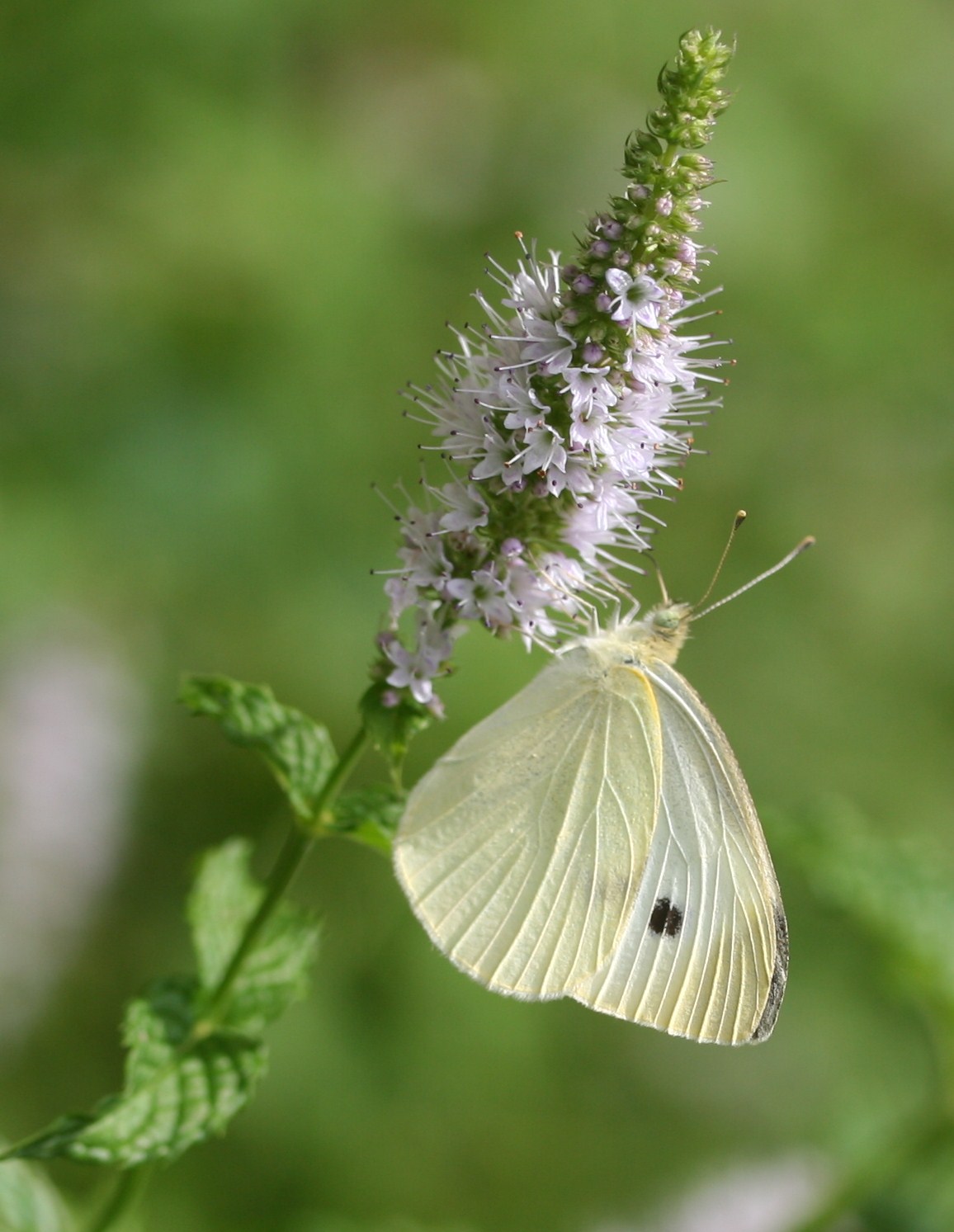
| Cabbage White (Pieris rapae): Here are at least Cabbage Whites, one an adult, one a caterpillar and at least one egg, on a large cabbage in the North Carolina Botanical Garden, Orange County, NC, 5/28/03. | Courtship process of Cabbage Whites, Old Salem, Winston-Salem, Forsyth County, NC, 3/21/11. | Female Cabbage White, Boone Greenway Trail, Watauga County, NC, 6/30/10. Dorsal view. | Cabbage White, Natural Bridge, Rockbridge County, VA, 7/8/09. Lateral (ventral wing) view. | Cabbage White, Durham, NC, 11/5/14 |
Yellows and Sulphurs (Coliadinae sub-family)
Little Yellow (Pyrisitia lisa)
 |
|||||
| Little Yellow, at roadside, flushed out by Randy Emmitt, north Durham County, NC, 8/15/10 |
Mimosa Yellow (Eurema nise)
 |
|||||
| Mimosa Yellow, San Antonio Botanical Garden, Bexar County, TX, 5/26/10 |
Orange-barred Sulphur (Phoebis philea)
 |
||||
| Orange-barred Sulphur, New Orleans, LA, 10/24/08 |
Clouded Sulphur (Colias philodice)
 |
 |
|
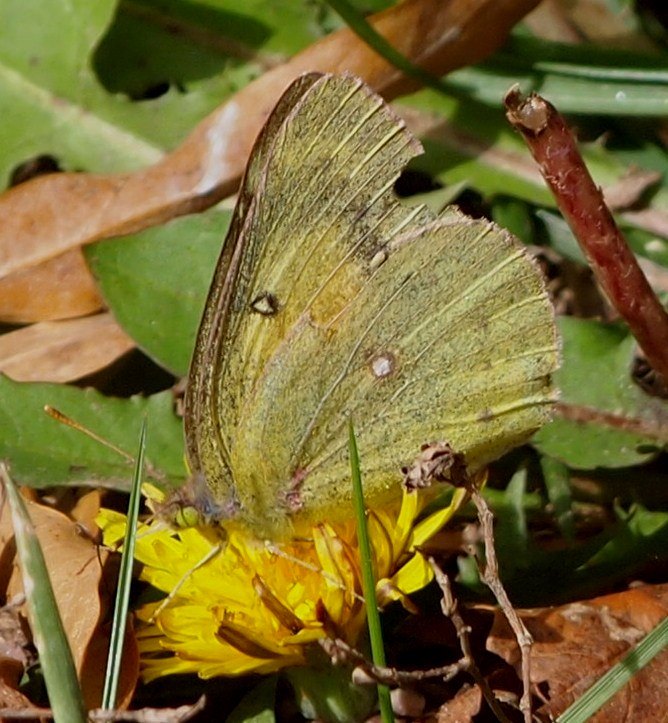
| Clouded Sulphur (Colias philodice), Asheville, Buncombe County, NC 5/25/04. | Clouded Sulphur, Durham, NC, 11/15/11 |
Orange Sulphurs (Colias eurytheme)
To some butterfliers, the sighting of an Orange Sulphur is merely occasion for a yawn: they are officially Common to Abundant. However, I find them very interesting because of their great variety by region -- and abundance.
"Normal" Orange Sulphur, Fredericksburg, VA
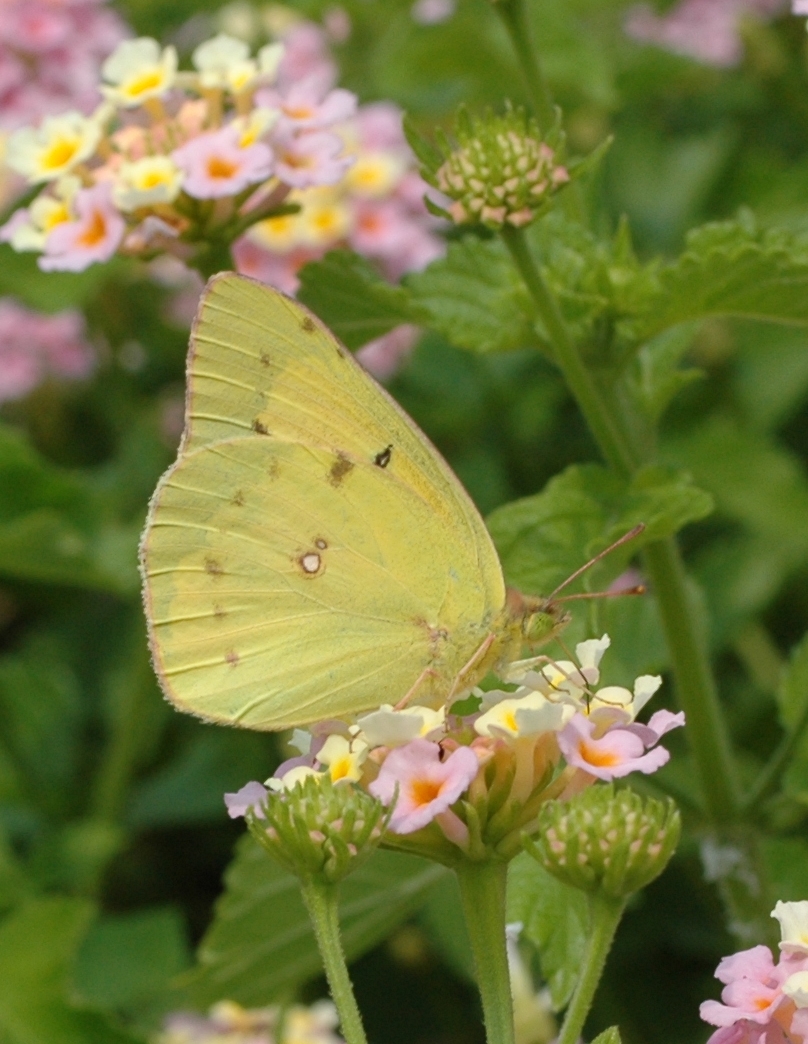 |
| On lantana. © 2006 Mick Phillips |
"Normal" Orange Sulphurs in Durham: orange and black, no white or green
 |
 |
 |
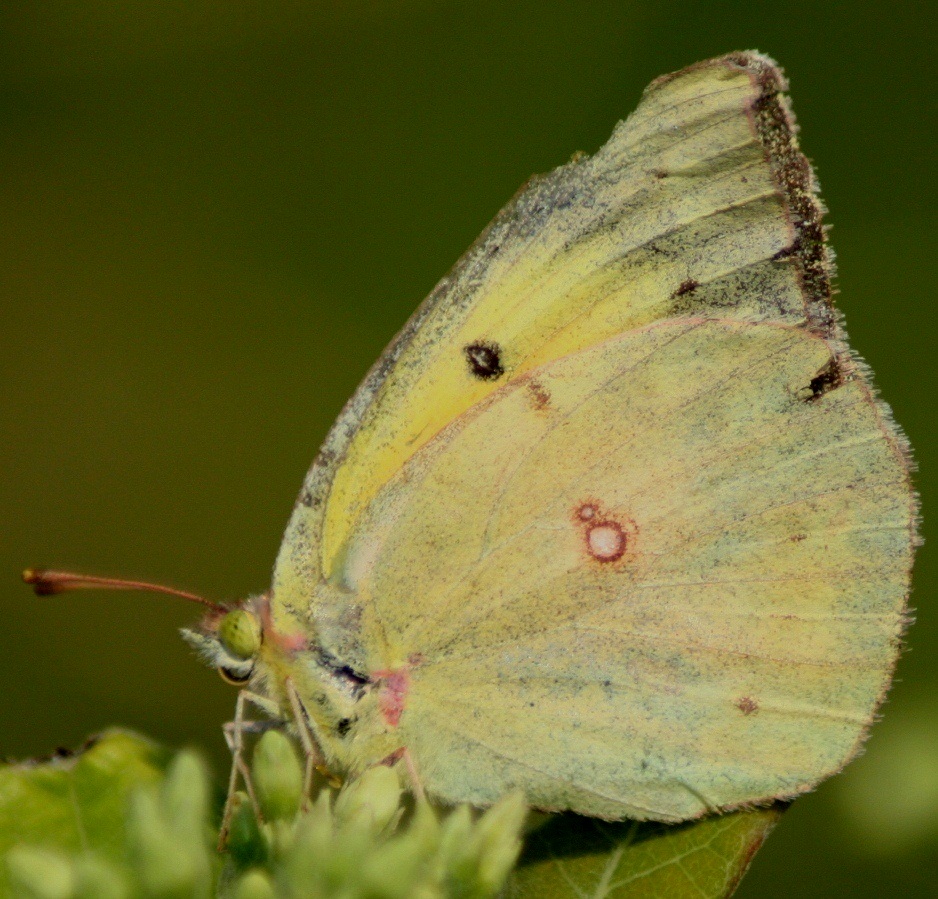 |
| Orange Sulphur, Durham, NC, 10/14/08 | Orange Sulphur, dorsal view, Mason Farm Biological Reserve, 5/21/09 | Orange Sulphur, Durham, 5/3/06 | Orange Sulphur (Colias philodice), Mason Farm Biological Reserve, 6/17/06 |
Green Orange Sulphurs (late winter)
 |
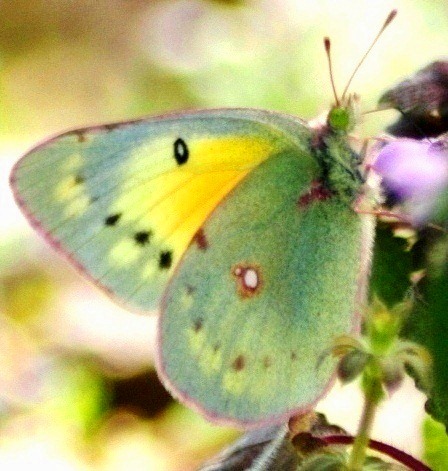 |
| Orange Sulphur (Colias philodice), Greenville, NC, 2/16/06 | Orange Sulphur (Colias philodice), Durham, NC, 2/21/07 |
Late fall Orange Sulphur
 |
||
| An unusual Orange Sulphur, Durham, NC, 10/31/13 |
Orange County White Form Orange Sulphur, 9/22/04
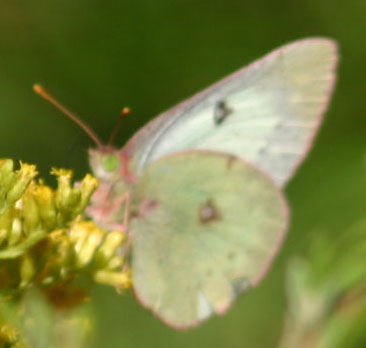 |
| White form Orange Sulphur, Mason Farm Biological Reserve, 9/22/04. This butterfly has more pink than the typical Pink-edged Sulphur! |
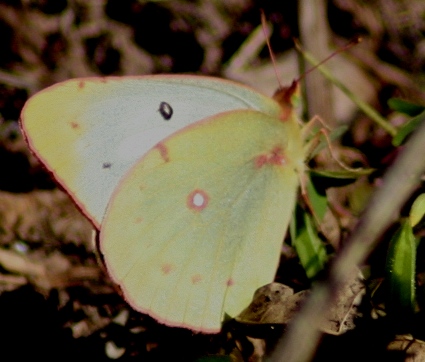
Durham County white form Orange Sulphur
 |
 |
| White form Orange Sulphur, Durham, 10/31/05. | White form Orange Sulphur, Penny's Bend, Durham County, NC, 5/24/08 |
Asheville, Buncombe County, NC Orange Sulphur
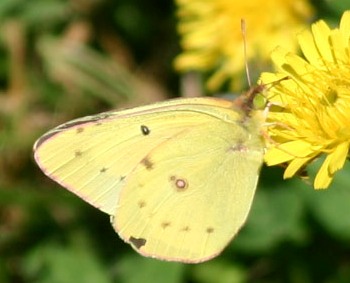 |
| Orange Sulphur, 6/1/04, Asheville, Buncombe County, NC. |
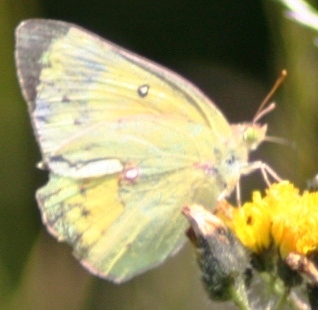
Mount Mitchell (NC) summit Orange Sulphurs, 7/9/05: all appeared in the grass next to the parking lot or the brush just beyond it except for the rightmost butterfly.
 |
| A classic white form Orange Sulphur. Note the prominent pink border. |
 |
 |
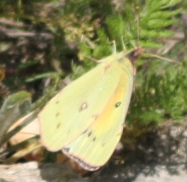 |
| A very worn normally colored Orange Sulphur. | This fairly fresh normally colored Orange Sulphur was hiding in the grass. | A slightly faded Orange Sulphur that seemed to lie on its side. |
Boone, Watauga County, NC Orange Sulphur, 8/8/06
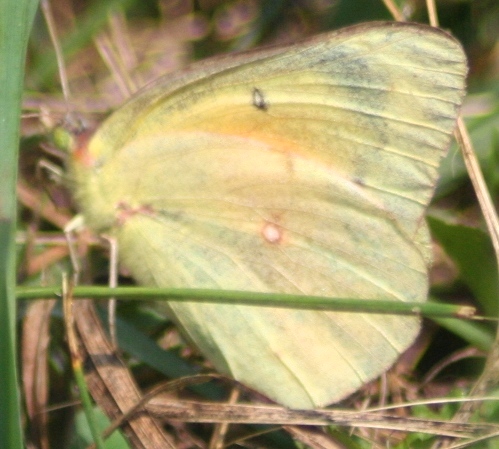 |
| Orange Sulphur, Moses Cone Memorial Park, Watauga County, NC, 8/8/06 |
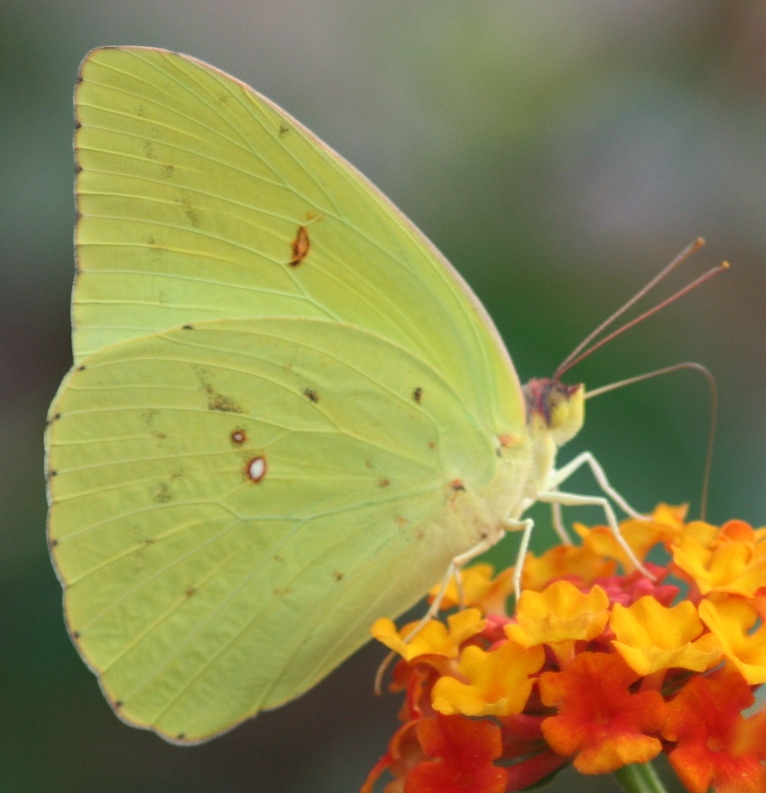
Cloudless Sulphurs (Phoebis sennae)
 |
 |
 |
 |
 |
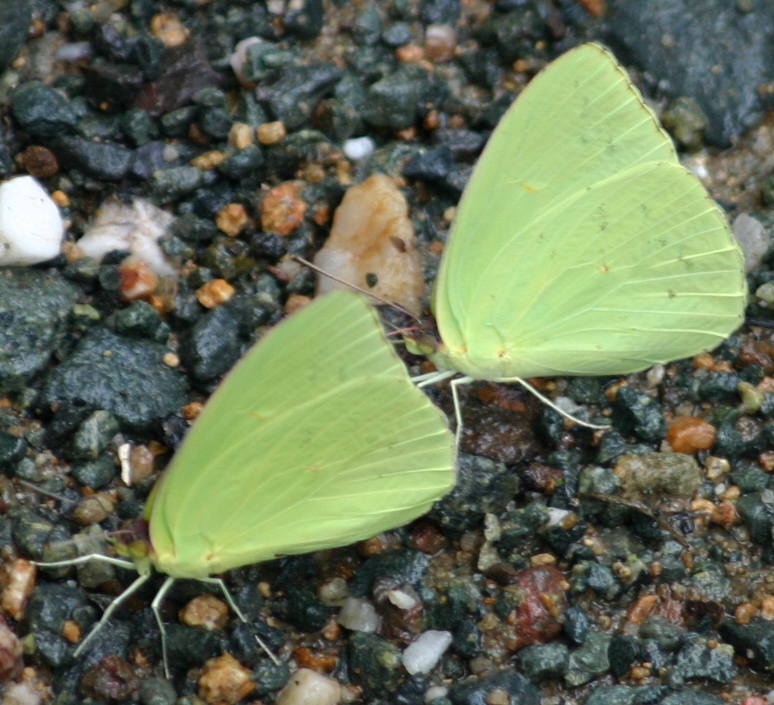 |
| Female Cloudless Sulphur, North Carolina Botanical Garden, Orange County, NC, 10/10/10 | Somehow this eclosing female Cloudless Sulphur got rotated 90° by the thumbnail software. Third Fork Creek Trail, Durham, NC, 9/12/12 | Male Cloudless Sulphur, Duke Gardens, Durham, NC, 9/17/05 | Cloudless Sulphur, dorsal view. Durham, NC, 10/15/08 | Mating Cloudless Sulphurs The male was on top, carrying the upside-down female during intermittent flights. Flat River Impoundment, Durham, NC, 10/4/10 | Male Cloudless Sulphurs, Mason Farm Biological Reserve, Orange County, NC, 8/24/05. Photo taken by Karl Gottschalk. |
Sleepy Orange (Eurema nicippe)
 |
| Sleepy Orange (Eurema nicippe), Little Scaly Mountain, Macon County, NC, 8/19/04. There is a lot of variation in wing markings for this species. So much so that I've devoted a whole page to this subject at Sleepy Oranges. |
Dainty Sulphur (Nathalis iole)
 |
 |
|||||
| Dainty Sulphur (Nathalis iole), Gulfport, MS, 10/16/10 | Dainty Sulphur (Nathalis iole), Durham, NC, 9/27/12 |
Copyright © 2005-2011 Dorothy E. Pugh